Nobody knows what AI costs until the invoice
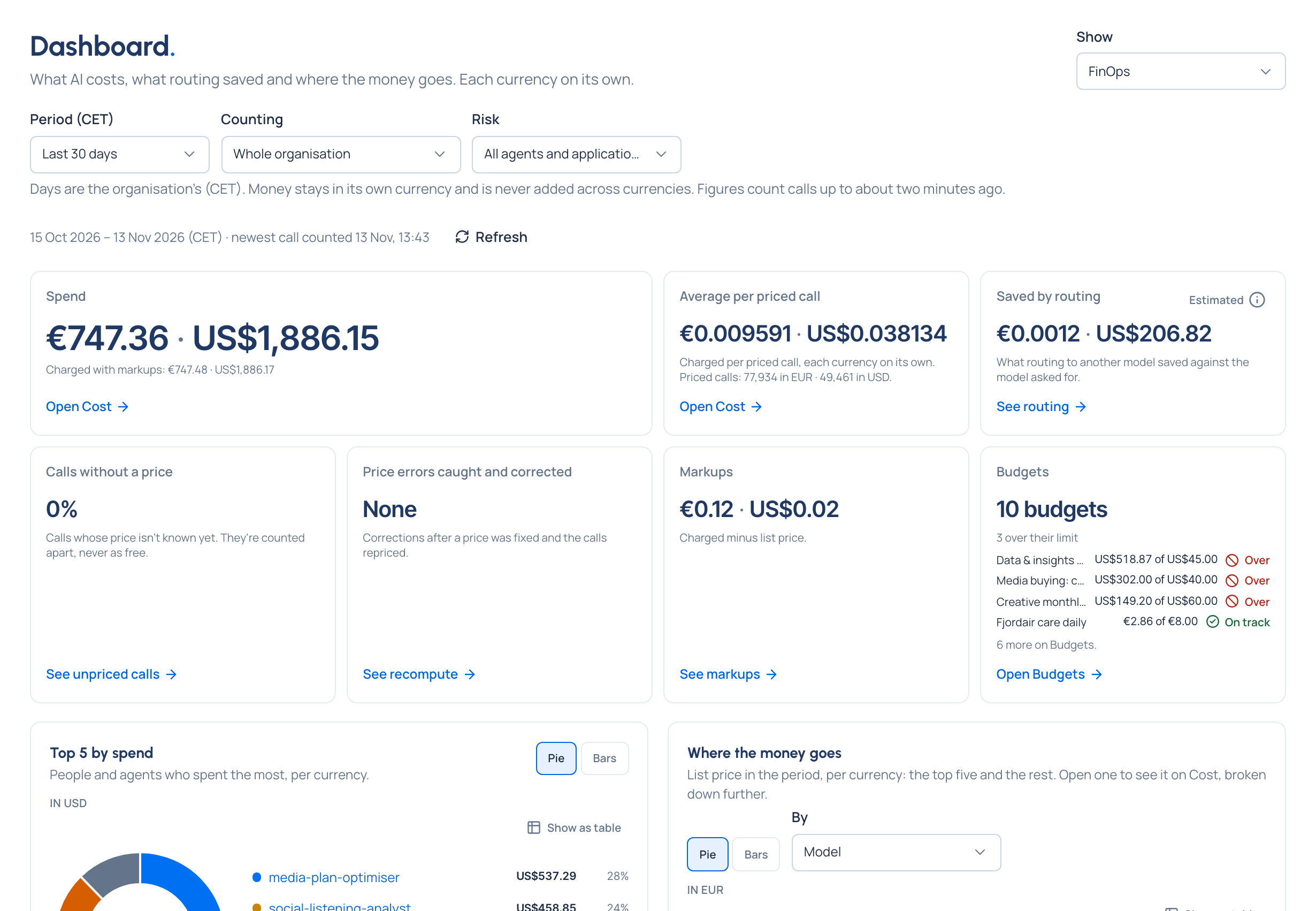
Every call priced within minutes, at the price in force when it was made, and charged to the team, application, agent and person behind it. Budgets that warn, stop calls or switch to a cheaper model before the bill arrives.
The problem
The invoices arrive at month end: one per provider, a total per project at best, no owner on any line. Finance asks which teams spent what. Engineering asks which agent tripled its usage on Tuesday. Nobody can say, and the one thing everyone learns is that a runaway agent over a weekend costs more than the whole month before it.
Why it stays unsolved
Provider invoices are written for the provider's accounting, not yours. Splitting them means exporting usage, matching API keys to teams in a spreadsheet, and pricing tokens by hand, with prices that changed halfway through the month. Limits, where they exist, are set per provider account, not per team, and they act after the money is spent.
How Vidai handles it
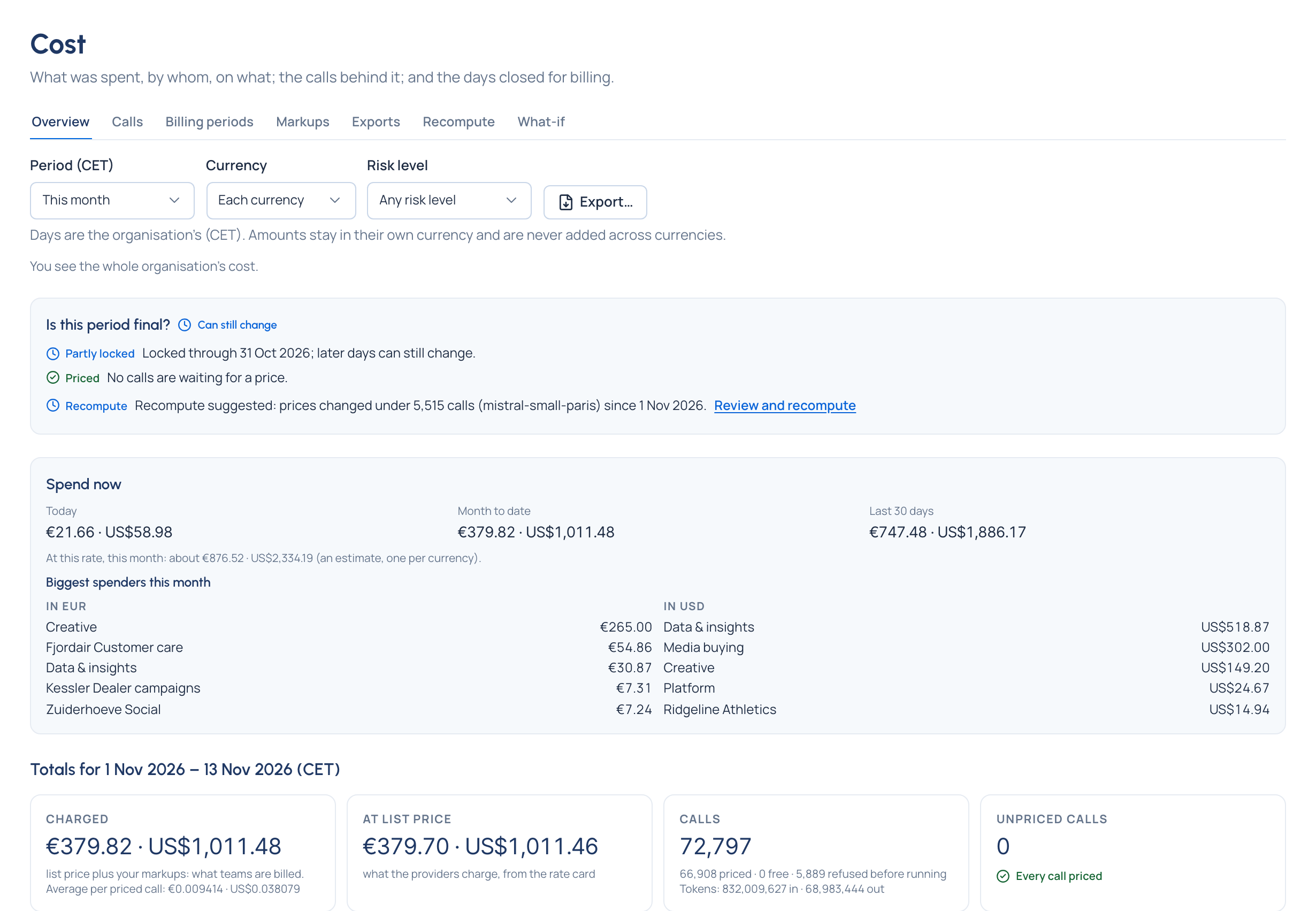
- Every call is priced as it's recorded, from the rate card, at the price in force when the call was made. Prices keep their history; a later price change never rewrites the past by accident.
- Every call has an owner. Cost lands on the team, application, agent, person, key, model and provider, as they were when the call was made.
- Nothing unknown is shown as zero. A call with no price yet is unpriced, and every total says how many calls it leaves out. Currencies are never mixed or converted behind your back.
- Budgets that act. On any level, a budget can Notify only, Stop calls at the limit, or Send calls to another model at the limit. Before you save one, you can see how last week would have gone with it.
- Money you can bill from. Markups and chargeback, locked billing periods with late calls counted as adjustments, exports, and a recompute after a price arrives late Enterprise.
What Enterprise includes depends on the features your licence includes.
What changes for you
- "What did AI cost us last month, by team?" takes one page, not a week with a spreadsheet.
- The runaway agent is stopped on Saturday, by a budget, not discovered on the invoice.
- Savings you can see before you make them. What-if shows what your real calls would have cost on other models; a routing rule turns the saving into the default.
- Proof: the demo organisation's FinOps dashboard: four weeks of calls, every one priced and owned.